Why Chemical Earthing Material Performs Better in High-Resistance Soil
- vasundharaearthing
- Apr 30
- 2 min read
High-resistance soil demands engineered grounding solutions. Industrial sites across rocky and arid regions face unstable earthing performance due to elevated Soil resistivity (Ohm-meters), poor moisture retention, and inconsistent Ionic conductivity across seasonal cycles.
We analyze why conventional methods fail, how chemical earthing material creates stable low-resistance paths, and how chemical earthing pricing translates into long-term operational advantage for industrial systems.

Every section focuses on performance, durability, and measurable electrical safety outcomes under real fault conditions. No theory, only field-proven engineering logic.
In this post, we’ll explore why chemical earthing material works fine in high-resistance soil.
Engineering Performance in High-Resistance Soil Conditions
The High-Resistance Nightmare
Rocky terrain exposes every weakness in traditional earthing. Salt-and-charcoal pits rely heavily on moisture presence, but dry and fractured soil structures interrupt ionic movement, causing resistance values to fluctuate beyond acceptable safety limits.
Grounding becomes unreliable when you need it most.
Across multiple project sites, we’ve seen salts wash out or migrate, leading to electrolytic leaching, air gaps, and loss of proper Ohmic contact over time.
Maintenance cycles increase, yet performance continues to degrade, especially during peak load faults and lightning events. That’s not a system, it’s a recurring failure.
Material Integrity: Chemical Earthing Material Advantage
Chemical earthing material stabilizes resistance permanently.
Engineered compounds use Hygroscopic moisture retention to maintain consistent ionic pathways, binding water molecules within the backfill matrix even in fractured rock or sandy profiles.
Stable moisture means stable conductivity.
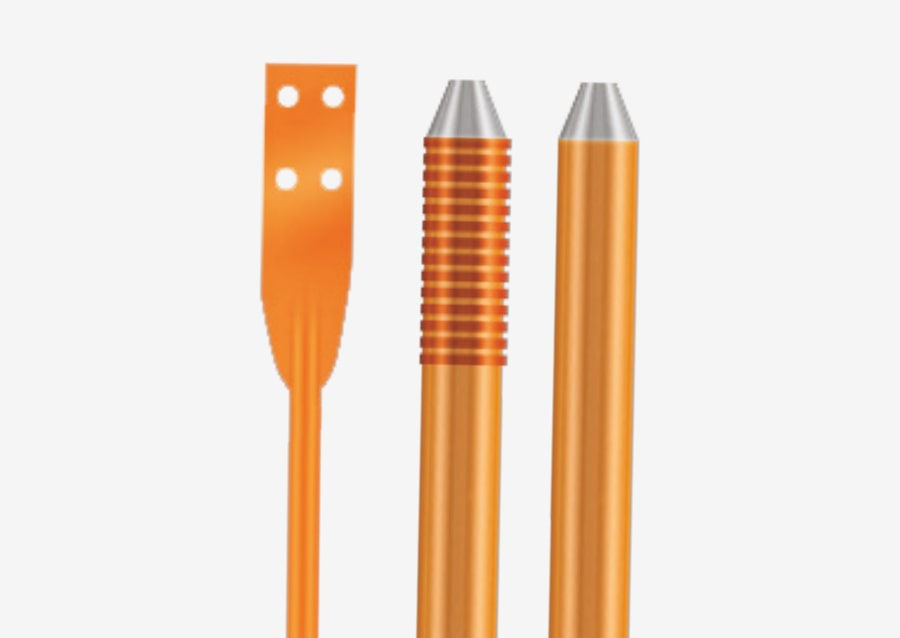
We design electrodes that create uniform Ohmic contact zones, eliminating air gaps while resisting electrolytic leaching, ensuring long-term integrity without seasonal degradation or performance collapse .
The result is a controlled, low-resistance path that performs under fault currents, lightning impulses, and transient surges without fluctuation across years. Performance becomes predictable, not conditional.
The Economics of Safety: Chemical Earthing Price Reality
Cheap pits cost more over time. Initial chemical earthing price appears higher, yet lifecycle analysis across 15–20 years shows near-zero maintenance, eliminating recharging cycles, labor costs, and system downtime in critical installations.
Capex increases, Opex disappears. We evaluate grounding systems based on failure risk, not installation cost, because unstable earthing leads to equipment damage, safety hazards, and compliance violations under fault scenarios .
Industrial operators choosing chemical earthing material secure consistent resistance values, lower risk exposure, and measurable ROI through uninterrupted operational reliability. Safety engineered once, not repaired repeatedly.


Comments